
The visual landscape of Newcastle’s city centre is on the verge of a dramatic transformation as local authorities prepare to vote on a project that aims to turn a long-standing eyesore into a vibrant hub of activity.
This week, city councillors will weigh in on a proposal to breathe new life into the corner of Percy Street and Gallowgate. If the green light is given, the site of the former Newcastle Labour Club and Percy House will be completely overhauled, making way for a massive student accommodation complex and a highly anticipated pedestrian link to St James’ Park.
For years, the area around Percy House and the empty Labour Club has been viewed as a blight on an otherwise bustling part of the city. The buildings are currently seen as poor in design and have been criticized for their negative impact on the local aesthetic.
The Hanro Group, the developers behind the vision, want to sweep away the decay and replace it with something functional and modern. The plan involves the demolition of the vacant Labour Club on Leazes Park Road and the removal of the tallest, ten-story section of Percy House.
What remains of the current structure will not be left to wither. The smaller, five-story block of Percy House is set for a comprehensive refurbishment and an extension that will bring it up to seven stories. Standing alongside it will be a brand-new, 13-story building.
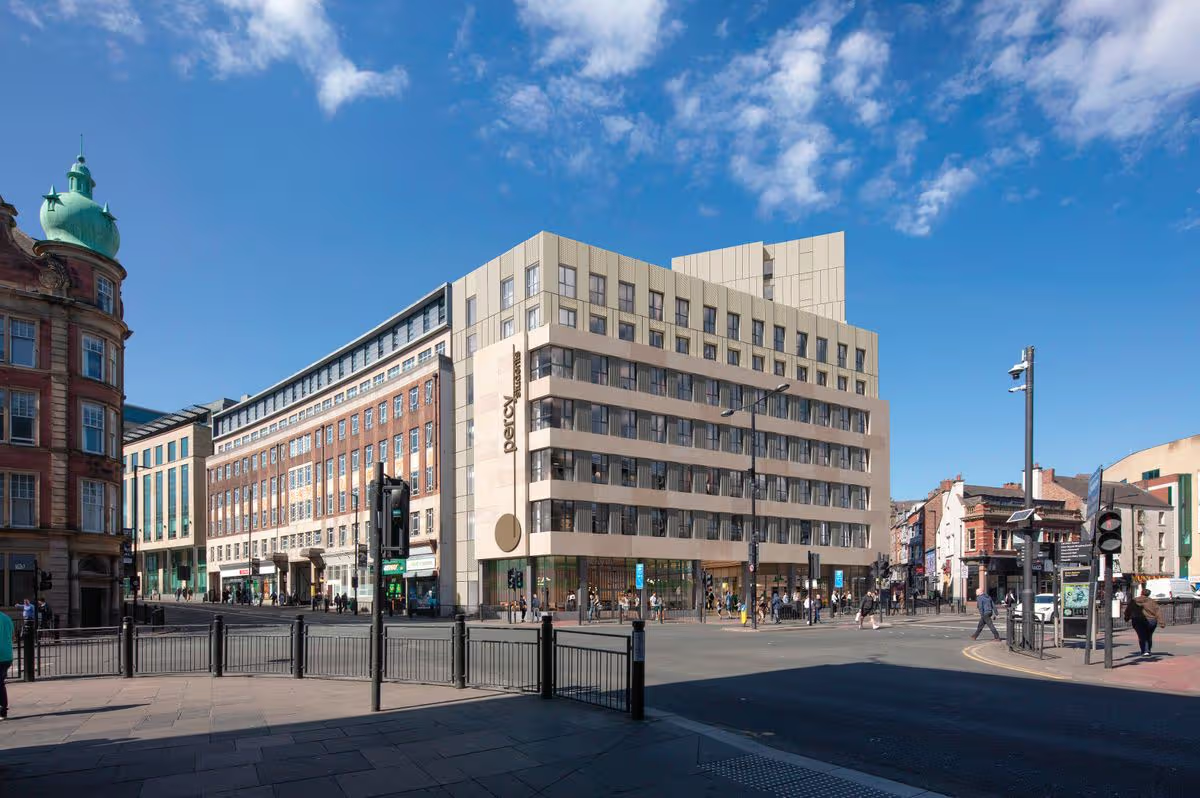
Together, these structures will create a sprawling residence with enough space for 432 students. This is a massive addition to the city’s housing stock and one that city planners believe is desperately needed.
The logic behind the move is rooted in a significant housing crisis within the local academic community. Recent data suggests that for every available bed space in purpose-built student housing, there are roughly 2.4 students searching for a place to sleep.
Between the years 2019 and 2025, there was a noticeable lull in new student developments in Newcastle. With a student population exceeding 60,000, roughly 15,500 of them are currently living in private houses of multiple occupation, often referred to as HMOs.
By funneling students into dedicated city-centre blocks like the one proposed for Percy Street, the council hopes to free up traditional terrace houses for local families, effectively balancing the needs of permanent residents with the city’s massive student demographic.
Beyond the brick and mortar of the housing units, the project offers a “significant public benefit” that has long been a dream for city officials: a dedicated public walkway and cycling path. This new route would stretch from Percy Street, through Strawberry Lane, and lead directly toward St James’ Park.
For Newcastle United supporters, this is excellent news. On matchdays, the path would provide a much more direct and accessible way to reach the stadium, cutting through what is currently private land that has hindered urban flow for decades.
Because the land is privately owned, the council has found it difficult to complete this final piece of the pedestrian puzzle until now. This planning application provides the perfect leverage to finally secure that access.
However, the path to approval is not entirely without friction. City planners have been transparent about the fact that such a tall development will have a “significant detrimental impact” on a neighboring property at 6-10 Leazes Park Road. This nearby site also has permission for student housing but is currently sitting empty.
The sheer height of the new 13-story block means the neighbor will suffer a substantial loss of natural light. While this is a serious concern, local authority officers have concluded that the greater good outweighs the specific harm to that one vacant building.
The report going before the committee suggests that while the plan might not strictly follow every single rule in the statutory development handbook, the “material considerations” make it a winner.
They point to the use of a brownfield site land that has already been built on and is currently underused as a major plus. Rehabilitating such a prominent corner of the city is seen as a way to reinstate the historic layout of the area while providing modern amenities.
As the planning committee prepares to meet this Friday, the recommendation is firmly in favor of approval. The “tilted balance” mentioned in the official reports suggests that the benefits housing for 432 people, the removal of a city eyesore, and the creation of a major new public walkway simply carry more weight than the concerns about architectural design or shadows cast on neighboring walls.
If the councillors agree, work could begin soon to erase the ghosts of the old Labour Club and replace them with a bustling gateway to one of the most famous football grounds in the world. It marks a new chapter for Gallowgate, turning a place of neglect into a cornerstone of the city’s future growth and accessibility.