
In the immediate aftermath of Newcastle United’s heavy 4-1 defeat at Anfield, many expected a scene of high tension and harsh words. However, the atmosphere inside the dressing room was surprisingly different. Instead of laying into his squad for the second-half collapse against Liverpool, manager Eddie Howe chose a path of empathy and support.
He understood that his players had started the game with real intent, even taking a deserved lead before a disastrous few minutes prior to halftime allowed Hugo Ekitike to turn the tide. By the time Florian Wirtz and Ibrahima Konate added more goals in the second half, the game had slipped away, but Howe’s focus remained on the physical and mental toll his thin squad is currently enduring.
As the team left the stadium, a stony silence hung over the camp. The journey back to Tyneside was quiet, reflecting a group that knows its Premier League campaign is sliding into dangerous territory. While the fans are understandably frustrated, the decision-makers at the club are not planning any knee-jerk reactions.
The Public Investment Fund (PIF) and the local hierarchy remain supportive of Howe, but there is no denying that the club’s league position is now a primary concern. The dream of returning to the Champions League is drifting, with Liverpool now holding a six-bitter lead over the Magpies.

Behind the scenes, the support for Howe remains firm. Both CEO David Hopkinson and Sporting Director Ross Wilson are well aware of the limitations placed on the manager. Between a relentless injury list and the strict Profit and Sustainability Rules (PSR) that have hampered their ability to spend in the January window, Howe is largely being judged on how he manages the specific tools he has.
There is a deep appreciation for the fact that Newcastle has stayed competitive in the cup competitions and Europe, even as their domestic consistency has faltered. Currently, the team has won just nine of their twenty-four league matches, a statistic that would usually trigger alarm bells, yet the context of their “other” successes provides a shield for the manager.
The reality, however, is that the owners are looking at the long-term financial health of the club. In the modern game, “no Champions League means no party” when it comes to balancing the books. Without the massive revenue generated by Europe’s elite competition, Newcastle’s ability to recruit top-tier talent in the summer will be severely restricted.
This is why the final league position will ultimately be the yardstick used to judge this season. With fourteen matches remaining, the schedule is far from kind. Newcastle still has to travel to face giants like Manchester City, Arsenal, Chelsea, and Tottenham. Navigating those away fixtures while trying to climb back into the top five will require a level of consistency they haven’t shown so far this year.
Howe himself is trying to stay grounded. After the Liverpool rout, he admitted that he hadn’t even looked at the league table, preferring instead to digest the match and focus on the points still available. He was adamant that he would not “turn on his team.”
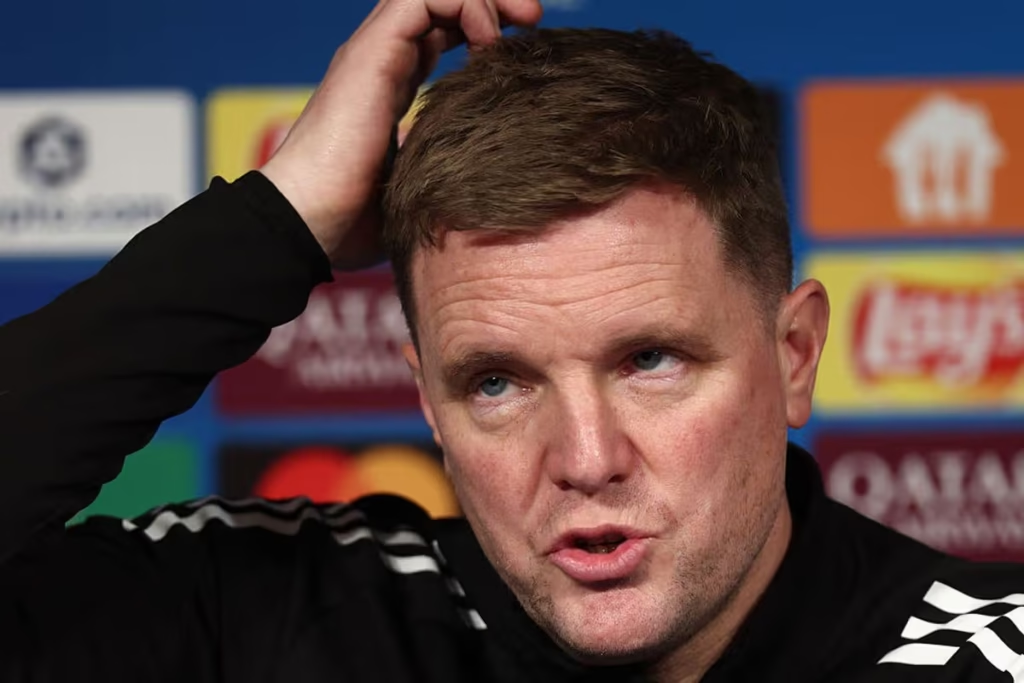
He knows his players are giving everything they have, and he pointed out that the absence of several key stars who would otherwise be automatic starters is the main reason for the current dip in form. For Howe, it is about protection and morale; he knows that losing the dressing room now would be the end of their season.
Despite the “doom and gloom” following the Anfield result, there is still plenty to play for, and the narrative could change in an instant. Newcastle is currently preparing for a trip to the Etihad Stadium for the second leg of the Carabao Cup semi-final against Manchester City.
While they trail by two goals, the tie is far from over. If Howe can inspire a comeback and reach his third Wembley final, the perspective on his tenure will shift from a struggling league campaign to a historic cup run. Furthermore, the club still has an FA Cup tie against Aston Villa and a Champions League playoff against Qarabag on the horizon.
When you look at the raw numbers for 2026, the picture isn’t entirely bleak. Newcastle has won four of their nine games across all competitions since the turn of the year. While the league form is a worry, the team is still very much alive on multiple fronts.
The hierarchy understands that injuries have stripped the squad of its depth, and for now, the “glass remains half full.” The focus is on dusting themselves down and preparing for the next battle.
Success in the cups would be a welcome distraction, but the long-term goal remains a stable climb up the Premier League table to ensure the Newcastle project doesn’t lose its momentum.