
The aftermath of Newcastle United’s goalless draw against Wolverhampton Wanderers has left fans with more questions than answers. While the Magpies technically dominated the match at Molineux, the lack of a result has brought a simmering issue to the surface: the team’s struggle to break down defensive, “low-block” teams.
Despite controlling the ball and territory for almost the entire afternoon, it took until the 85th minute for Newcastle to actually test the Wolves goalkeeper. It was a performance that mirrored a recent trip to Old Trafford, where the team looked comfortable on the ball but lacked the imagination to actually put it in the net.
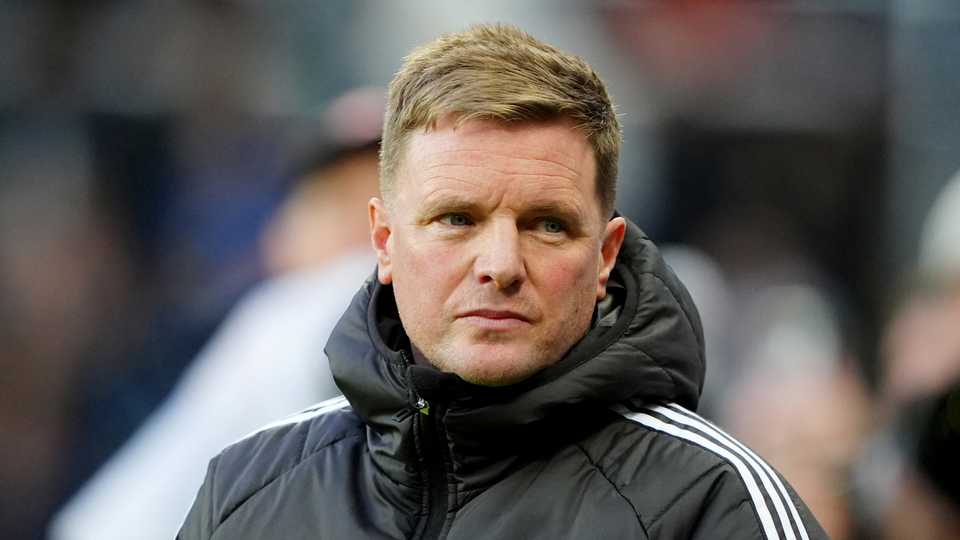
In the wake of this frustrating stalemate, head coach Eddie Howe was asked the question on every supporter’s mind: will the club bring in new attacking talent to provide that missing spark?
Howe’s response was a sobering reality check for anyone expecting a major splash in the January market. He stated quite clearly that the club currently lacks the “financial ability” to pursue new forward signings.
This admission highlights the tightrope the club is walking regarding financial regulations, even as the need for more quality in the final third becomes undeniable.
Howe was remarkably honest about his team’s shortcomings. He acknowledged that the attacking output simply wasn’t good enough and admitted that criticism of their goal-scoring form on the road is entirely fair.
While he was pleased with the effort and the “endeavour” of his players, he confessed that the high-level quality required to unlock a stubborn defense was absent. In matches where an opponent parks ten players behind the ball, Howe noted that you often rely on a single moment of individual brilliance or a perfectly executed set-piece. On Sunday, neither arrived.
When you look at the season as a whole, Newcastle’s numbers aren’t actually poor. They have managed 56 goals across 33 matches in all competitions. In the Premier League specifically, their tally of 32 goals in 22 games puts them right on the heels of teams like Aston Villa and Liverpool.
The problem is consistency. Howe pointed out that football is a “strange game,” noting that just two weeks ago his side looked free-scoring against Leeds United. The contrast between that performance and the blunt display against Wolves is a puzzle the coaching staff is desperate to solve.
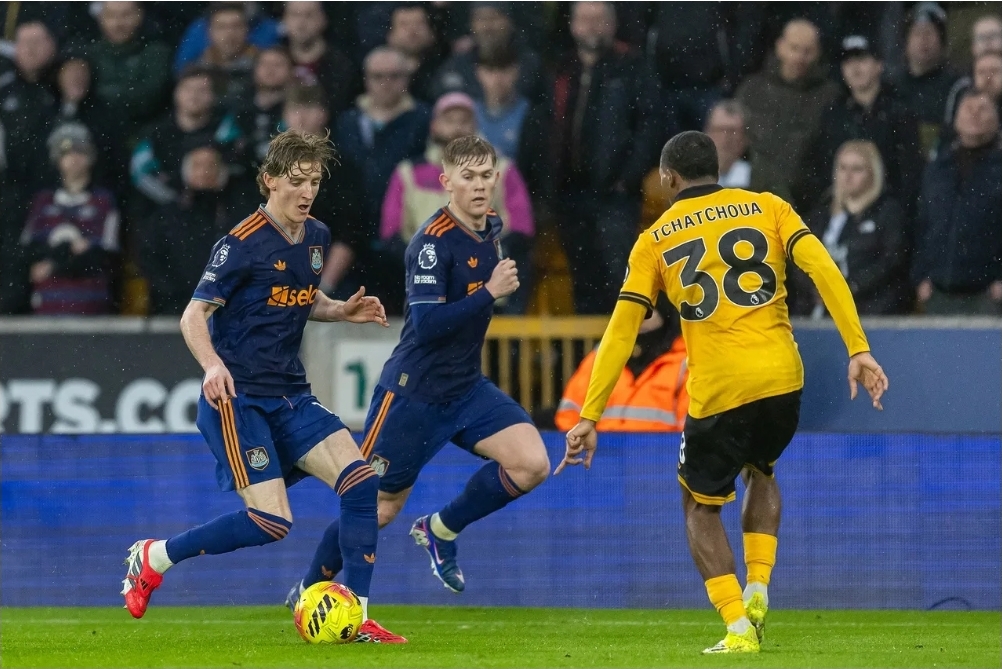
During the match, Howe attempted to change the game by bringing on Yoane Wissa, Lewis Miley, and Anthony Elanga. While these changes didn’t result in a goal, Howe defended the variety within his squad.
He pushed back against the idea that he has too many “like-for-like” players. He argued that while fans might see a bench full of wingers, each player from Harvey Barnes to Anthony Gordon and Anthony Elanga brings a different set of attributes to the pitch. He was particularly happy with Elanga’s contribution, noting that he offers a threat that differs from the starting wide players.
| Premier League Context | Newcastle United | Aston Villa | Liverpool |
| Goals Scored | 32 | 33 | 33 |
| Games Played | 22 | 22 | 22 |
| Current Standing | 8th | 3rd | 4th |
Howe also addressed the physical state of his squad. With a relentless schedule, some have wondered if fatigue is beginning to take its toll. The manager disagreed, suggesting that while he saw signs of tiredness in the recent Manchester City game, the players looked physically fit against Wolves.
The real issue was tactical rather than physical. He felt his players delivered several dangerous crosses into the box, but there simply weren’t enough Newcastle shirts in the danger zone to capitalize on them.
As the January window enters its final stages, the message from the manager is one of pragmatism. The squad that traveled to Molineux is likely the squad that will have to finish the season.
Howe expressed pride in managing this group of players, but he knows that finding a way to convert possession into goals against negative opposition is the only way they will climb back into European contention.
